
Without leaving the bandwidth of 2.4 GHz, the Wi-Fi g approved in the year 2003 equaled with regard to the maximum theoretical transmission speed of 54 Mbit / sec.
Autor: Yenifer Vargas
WiFi 802.11b:
The 802.11b revision soon began to enjoy widespread acceptance in general because operating in the 2.4 GHz band reduced attenuation by eliminating many interferences by improving the quality of the Wi-Fi signal.
WiFi 802.11a:
The first revision of the 802.11 standard was born back in 1999 and operates on the frequency band of 5 GHz, with a maximum speed of 54 Mbps, but it still offered the problem of excessive attenuation in the air due to the band in which it operated, so it was necessary to study the expansion to new frequency bands.
Transmission medium
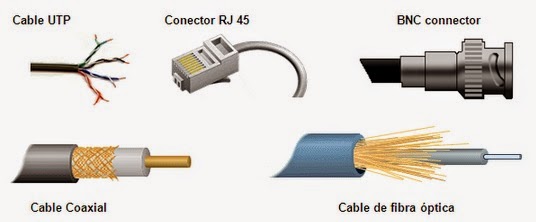
The transmission medium constitutes the physical medium through which the sender and receiver can communicate in a data transmission system. We distinguish two types of media: guided and unguided.
SLI bridges:
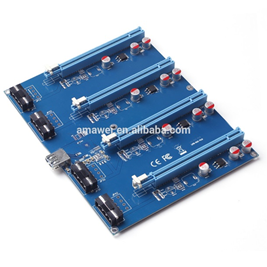
It is a method to connect two or more graphic cards to combine their performance. It is a parallel processing algorithm for computer graphics, which increases the processing power available for graphics. Source Wikipedia

CrossFire bridge:
This system allows, using a certified Crossfire board, to connect up to four graphic cards that support this technology in PCIe x16 slots. The total bandwidth that each card receives will depend on the configuration of PCIe transmission lines that have the north bridge included in the motherboard.

PCI Express:
It is a new PCI bus development that uses the programming concepts and the existing communication standards, but is based on a much faster serial communication system. This system is supported mainly by Intel, which started to develop the standard with the Arapahoe project name after withdrawing from the Infiniband system. Source concepts hardware-ruth blogspot.
PCI:
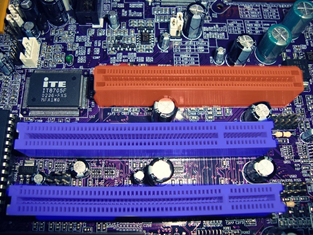
Peripheral Component Interconnect (PCI, «Interconnection of Peripheral Components») consists of a standard computer bus to connect peripheral devices directly to your motherboard.

AGP:
Accelerated graphics port is a port (since only one device can be connected, while several can be connected to the bus) developed by Intel in 1996 as a solution to the bottlenecks that occurred in the graphics cards they used the PCI bus.
PATA or IDE
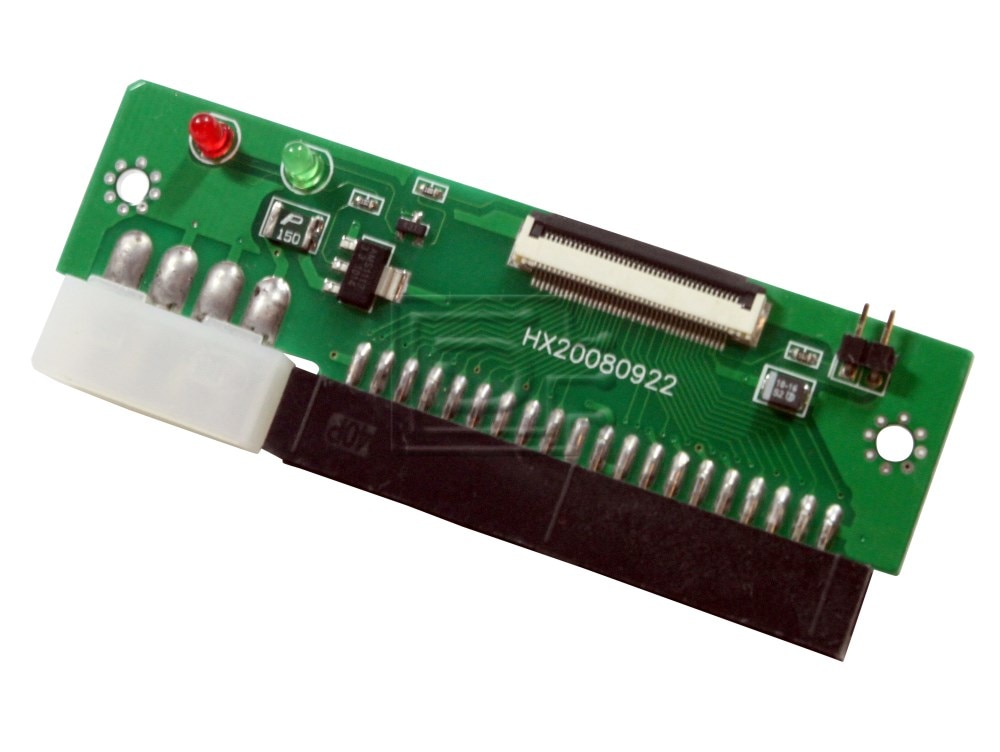
Originally known as IDE (Integrated device Electronics), is an interface standard for the connection of mass storage devices and optical drives using the ATA derived standard and the ATAPI standard.
 HARDWARE GLOSSARY